

S. aureus and Eczema Herpeticum: A Laboratory Paradox, a Bedside Emergency
Eczema herpeticum, or Kaposi-Juliusberg syndrome caused by HSV-1, is one of the situations in atopic dermatitis where clinical hesitation can be dangerous. Dermatologists who have seen severe cases remember the picture well: sudden painful monomorphic vesicles or punched-out erosions on eczematous skin, fever, facial involvement, sometimes ocular risk, and the possibility of rapid deterioration. At the bedside, the essential decision remains simple: suspected eczema herpeticum requires prompt systemic antiviral treatment.
A recent study from the Hanover group DOI: 10.1111/all.70392 adds a fascinating biological twist to this familiar emergency. Baumann and colleagues showed that AD patients with a history of eczema herpeticum have reduced skin microbial diversity and stronger staphylococcal dominance. This fits our clinical intuition: severe AD, dysbiosis, and Staphylococcus aureus often travel together. But their experimental data seem, at first sight, to say the opposite. In primary keratinocytes, heat-killed S. aureus reduced HSV-1 infection, whereas heat-killed S. epidermidis did not. Mechanistically, S. aureus appeared to place keratinocytes in an antiviral “alarmed state”, activating interferon-related pathways, antimicrobial peptides, and reducing HSV-1 entry factors such as nectin-1, HVEM, and syndecan-1.
So, is S. aureus protective or pathogenic? The apparent contradiction is best resolved by distinguishing the laboratory model from the clinical lesion. In vitro, heat-killed S. aureus provides microbial danger signals without bacterial growth, toxins, proteases, superantigens, scratching, oozing, or barrier destruction. The keratinocyte receives an alarm signal, but not the full pathogenic burden of live S. aureus. In real AD skin, S. aureus may aggravate inflammation, damage the barrier, increase itch, promote scratching, and contribute to bacterial superinfection. The same microbe may therefore deliver potentially useful innate immune signals in vitro while remaining clinically harmful in dysbiotic AD skin.
This paradox also fits broader work on AD with eczema herpeticum (ADEH). These patients are not simply patients with “more severe eczema plus HSV”. They appear to have a particular vulnerability of antiviral defence, including a type 2-skewed HSV-specific response and impaired type 1 antiviral immunity. The new paper adds a keratinocyte-microbiome layer: epithelial cells can be primed by microbial danger signals, but in ADEH patients this alarm may be insufficient, blunted, or overridden by barrier failure, type 2 inflammation, live bacterial virulence, and defective antimicrobial peptide responses.
For the clinician, the study does not suggest that staphylococcal infection should be ignored in eczema herpeticum. It suggests that some S. aureus-derived signals may one day help us understand or even harness epithelial antiviral defence. That is mechanistically exciting, but it does not change the bedside reflex. When eczema herpeticum is suspected, systemic acyclovir should be started immediately, without waiting for laboratory confirmation. HSV PCR and bacterial swabs are useful, but they should not delay treatment. The practical question is not “acyclovir or antibiotics?” It is: acyclovir now – and does this patient also need antistaphylococcal treatment?
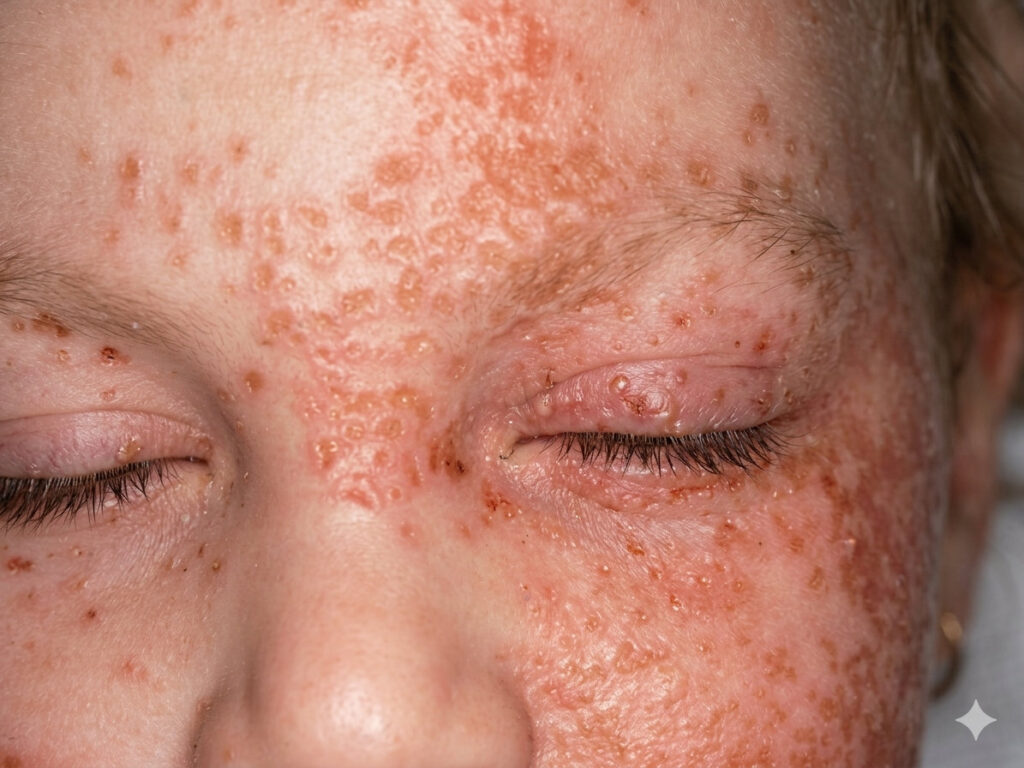
In severe cases, the answer may be yes. Honey-coloured crusting, pustules, oozing, cellulitis, high fever, systemic toxicity, lymphangitis, or positive bacterial culture should lower the threshold for antistaphylococcal coverage according to local practice and resistance patterns. Conversely, antibiotics need not be automatic in every mild or early case if bacterial infection is not clinically suggested. The decision should be clinical, but hesitation should not come from the mistaken idea that S. aureus might be “protective” in the acute setting.
Looking ahead, the study opens an attractive translational question: can selected S. aureus-derived signals be isolated, detoxified, or engineered to train epithelial antiviral responses without exposing AD skin to live pathogenic bacteria? This remains speculative. The immediate lesson is more practical: the microbiome is context-dependent, the science is becoming more subtle, but the emergency remains clear – treat HSV promptly, look actively for bacterial superinfection, and combine antiviral and antistaphylococcal therapy when the bedside picture warrants it.
ISAD Beijing 2026 Annual Meeting
IMPORTANT DEADLINES
Call for Abstracts: July 15!
Early Bird Rates End: July 31
In a Nutshell



#StayInformed:
Explore the Latest in AD Research!
News on PubMed:
Dive into our curated selection of cutting-edge studies from PubMed, offering valuable insights into various aspects of Atopic Dermatitis:
- Can inflamed AD skin become a gateway for topical biologics?
- Keratoconus and AD: should dermatologists ask about eye rubbing again?
- When “Steroid Failure” Is Not TSW
- Building AD in a Dish: Promise, but Not Yet a Consensus
- From Skin Scores to Global Health: Listening to the Patient Burden of AD
- OSMR: More Than the Other Half of the IL-31 Receptor